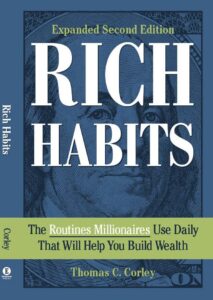
Tom Corley is the author of the Rich Habits Study, “Rich Habits”, Rich Kids”, “Effort-Less Wealth”, “Change Your Habits Change Your Life”, “Rich Habits Poor Habits”, and “Rich Habits Wealth Academy”. Tom is also a CPA, CFP®, and has a Masters in Taxation.
For five years I sat across from 233 wealthy people (177 of them self-made) and 128 people living in poverty and asked them the same 144 questions about how they spent every hour of their day. I expected the usual explanations: better schools, family money, connections, or pure luck. What I found instead was so consistent, and so politically incorrect, that most media outlets have spent a decade pretending it doesn’t exist.
The single biggest difference between the two groups was not starting capital, not college degrees, and not inheritance. It was the daily habits each group repeated—almost mindlessly—year after year. The self-made millionaires treated their days like a business. The poor treated theirs like entertainment. And the gap that produced was brutal.
Eighty-eight percent of the self-made millionaires spent at least 30 minutes every day reading material that made them better at their work or helped them achieve their goals. Only 2 percent of the poor did the same. Meanwhile, 77 percent of the poor spent more than an hour a day watching television, scrolling, or consuming fiction.
While the poor and middle class were streaming Netflix, the rich were studying their way out of poverty or the middle class.
Ninety-four percent of the self-made saved 20 percent or more of their net income for years. Zero percent of the poor did.
Eighty-seven percent of the poor carried credit-card balances; almost none of the rich did.
The poor played the lottery weekly. They treated money and wealth as something that was born from luck.
The rich didn’t gamble. They treated money and wealth as something that was the byproduct of sacrifice.
The mindset data was even starker.
Seventy-nine percent of the poor believed wealth comes from random luck. Only 8 percent of the rich agreed.
Ninety percent of the poor thought most rich people inherited their money. In reality, 76 percent of the millionaires in my Rich Habits Study were self-made – 41 percent grew up poor. The poor had constructed a feel-good rationalization that success was mostly luck and inheritance. The self-made had lived a story in which success was mostly the compounding of unsexy, boring daily habits.
One group was waiting for lady luck. The other group was creating their own luck through work and sacrifice.
The self-made also refused to waste their social capital. Ninety-six percent made a daily habit of not gossiping. Seventy-nine percent of the poor regularly did. The wealthy understood that relationships were a form of currency that could be destroyed in a single conversation. The poor treated other people’s reputations as disposable entertainment.
Over time, the rich accumulated allies who opened doors. The poor accumulated enemies and excuses.
None of this is comfortable. It is far easier to blame the system, the schools, the banks, or the rich themselves. My data does not support that narrative. The self-made millionaires in my study who came from poverty did not receive special exemptions. They simply stopped doing the things the poor in my study continued to do—and started doing the things the rich did every day. They read. They saved. They wrote down goals and pursued them daily. They exercised. They avoided bad debt, like consumer debt.
The poor in my study were not less intelligent or less hardworking in the conventional sense. Many of the poor worked long, hard hours. What they lacked was the specific, repeatable habits that turned their effort into assets. Effort without Rich Habits puts you on a treadmill. The self-made had forged habits that made success almost automatic. The poor had forged habits that made poverty almost automatic.
If that sounds harsh, it is only because the data is harsh.
Math doesn’t lie.
After five years of interviews, the pattern was unmistakable – the biggest difference between the millionaires and the poor was not money or education. It was what each group chose to do with the same 24 hours everyone is given. One group used those hours to build. The other used them to escape.
The results, measured in net worth and net misery, followed their daily habits.
